
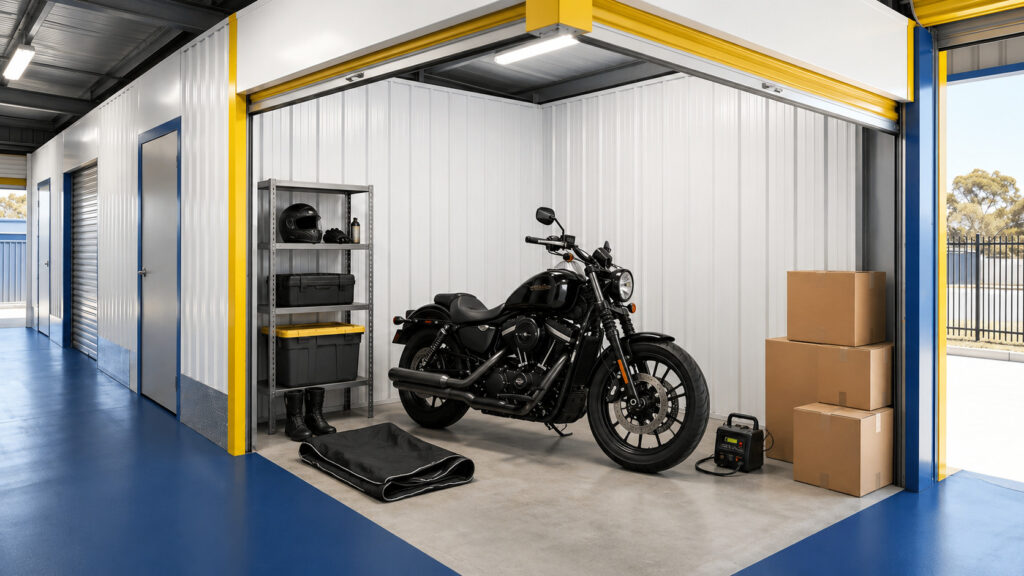
Leaving a motorcycle parked for several months takes more preparation than simply switching off the engine and putting a cover over it. Fuel, batteries, tyres, moisture and exposed components can all be affected when a bike is left unused for an extended period.
Whether you are travelling, moving house, clearing space from the garage or simply riding less for a while, preparing your motorcycle properly can make it much easier to get back on the road later.
The exact storage procedure varies between motorcycles, so always check your owner’s manual for model-specific maintenance requirements. The following steps provide a practical starting point for preparing a motorcycle for long-term storage.
When Does Long-Term Motorcycle Storage Make Sense?
Long-term motorcycle storage can be useful whenever you know your bike will not be ridden regularly for an extended period.
Common situations include:
- Travelling interstate or overseas
- FIFO or extended work commitments
- Moving somewhere without suitable garage space
- Renovating or moving house
- Keeping a weekend or recreational motorcycle off-site
- Freeing up space in a crowded garage
- Storing a project or second motorcycle
- Taking a motorcycle off the road temporarily
It can also be useful if keeping the motorcycle at home means leaving it exposed in a driveway, carport or other area where weather and security are concerns.
If you are unsure whether you need storage for a few weeks or several months, understanding the difference between short-term and long-term storage can help you decide what arrangement makes the most sense.
Clean and Dry Your Motorcycle Before Storage
A dirty motorcycle should not go straight into long-term storage.
Road grime, insects, dirt and moisture can remain on painted, metal and chrome surfaces for months if they are not removed first. Give the motorcycle a thorough clean before putting it away.
Pay attention to:
- Wheels and rims
- Fairings and painted surfaces
- Chrome and exposed metal
- Underside areas where dirt can collect
- Windscreens
- Chain and sprockets, where applicable
Once washed, allow the motorcycle to dry completely. Pay particular attention to areas where water can remain trapped.
Depending on the motorcycle and its finish, your manufacturer’s instructions may also recommend suitable waxes, polishes, corrosion protection or lubricants before long-term storage.
The important point is not to put the bike away while it is still dirty or damp.
Prepare the Fuel System and Check Fluids
Fuel and fluid preparation should be based on your motorcycle manufacturer’s recommendations rather than a one-size-fits-all procedure.
For many petrol motorcycles being stored for an extended period, manufacturers recommend using fresh fuel with an appropriate fuel stabiliser rather than simply leaving ageing fuel untreated. Follow the instructions for your specific motorcycle and the fuel treatment you use.
Before storage, it is also worth reviewing the motorcycle’s maintenance schedule and checking:
- Engine oil
- Coolant on liquid-cooled motorcycles
- Brake fluid
- Clutch fluid where applicable
- Chain lubrication on chain-driven motorcycles
- Any visible signs of fluid leaks
If servicing is already due or will become due during the storage period, completing the required maintenance before putting the motorcycle away can save another job later.
Never guess quantities, fluid grades or maintenance procedures. Refer to the owner’s manual or have the motorcycle serviced by a qualified technician if you are unsure.
Protect the Battery During Long-Term Storage
A battery can gradually lose its charge while a motorcycle is sitting unused.
How you manage it depends on the motorcycle and battery type. Your manufacturer’s instructions may recommend connecting an appropriate maintenance charger, disconnecting the battery or removing it for storage.
If using a battery maintenance charger, make sure it is suitable for the particular battery fitted to your motorcycle and follow the charger’s instructions.
Avoid relying on occasionally starting the motorcycle for a few minutes as a substitute for correct battery and storage maintenance. A proper battery care plan is more useful when the bike will remain parked for months.
Before storing the motorcycle, also inspect the battery terminals for obvious corrosion, looseness or damage.
Check Tyres and Reduce Pressure-Related Damage
Tyres should be checked before the motorcycle is placed into storage, not only when you take it back out.
Start by inspecting them for:
- Correct tyre pressure
- Excessive wear
- Cuts or visible damage
- Cracking or deterioration
- Objects lodged in the tread
Inflate the tyres to the pressure specified by the motorcycle manufacturer.
When a motorcycle remains parked in the same position for a long time, the tyres can carry the bike’s weight on the same contact area continuously. If your motorcycle and storage arrangement allow it, an appropriate centre stand or motorcycle stand may help reduce prolonged loading.
Otherwise, follow the storage guidance supplied by your motorcycle manufacturer.
Do not exceed the recommended tyre pressure in an attempt to compensate for storage.
Protect Your Motorcycle From Dust, Moisture and Corrosion
Where you store a motorcycle can be just as important as how you prepare it.
For longer periods, a dry and protected environment helps reduce exposure to rain, direct sunlight, dust and changing weather conditions.
A properly fitted motorcycle cover can add another layer of protection. Choose a breathable cover designed for motorcycle storage rather than wrapping the bike tightly in non-breathable plastic that may trap moisture underneath.
Before covering the motorcycle, make sure:
- The motorcycle is completely dry
- Hot components have cooled
- The cover is clean
- The bike is positioned securely
- Nothing sharp can damage the cover or paint
Check your owner’s manual for any additional preparation required for exhausts, air intakes or other openings during extended storage.
What to Do With Helmets, Riding Gear and Accessories
The motorcycle itself is only part of what needs storing.
Helmets, jackets, boots, gloves, spare parts and other accessories can take up a surprising amount of garage space. Easy Storage allows motorcycles to be stored alongside accessories such as helmets, leathers, boots, spare tyres and parts.
Clean and dry your riding equipment before packing it away.
Avoid sealing damp jackets, gloves or boots inside plastic bags. Moisture left inside riding gear can create unpleasant odours and may damage some materials over time.
For helmets, store them somewhere dry where they will not have heavy objects placed on top of them. Follow the helmet manufacturer’s care instructions, particularly when cleaning the shell, liner or visor.
Keeping your motorcycle equipment together can also make it easier to find everything when you are ready to ride again.
Indoor vs Outdoor Motorcycle Storage
Both indoor and outdoor motorcycle storage can be practical, but they provide different levels of protection.
Indoor Motorcycle Storage
Enclosed storage provides greater separation from direct sunlight, rain, wind and other outdoor conditions.
It may be particularly useful when:
- The motorcycle will remain stored for several months
- You want additional weather protection
- The bike has a high financial or sentimental value
- You also need space for riding gear or motorcycle parts
Outdoor Motorcycle Storage
Outdoor storage may suit riders looking for a straightforward place to keep a motorcycle or vehicle while freeing up room at home.
Preparation and an appropriate cover become particularly important when a motorcycle is kept outdoors for an extended period.
Easy Storage offers both outdoor and enclosed indoor options for motorcycle storage, allowing you to choose an option according to the bike, storage period and available budget.
What to Look for in a Motorcycle Storage Facility
Before choosing where to leave your motorcycle, consider more than the monthly storage price.
Security should be one of the first things you check. Useful features can include CCTV, controlled gate access, perimeter security and individually alarmed storage units.
Accessibility is also important. Think about when you are likely to collect the motorcycle and whether the facility’s access hours suit you.
Easy Storage’s Rockingham facility currently provides seven-day access from 5:30 am to 9:00 pm using a personal PIN. Businesses with a valid ABN can receive 24/7 access, while 24-hour personal access can be arranged by speaking with the team.
Other practical considerations include:
- Indoor and outdoor storage options
- Space for riding gear and spare parts
- Room for motorcycle or vehicle trailers
- Easy vehicle access
- Flexible rental terms
- The ability to choose a space appropriate for your motorcycle
The right option should protect the motorcycle without leaving you paying for substantially more space than you need.
Getting Your Motorcycle Ready to Ride Again
Do not immediately ride away after a motorcycle has been sitting unused for several months.
Start with a careful visual inspection.
Depending on the motorcycle and length of storage, check:
- Tyre condition and pressure
- Battery charge and connections
- Engine oil and other fluid levels
- Signs of leaks underneath the motorcycle
- Brakes
- Lights and indicators
- Chain or final drive condition
- Controls
- Fuel condition
Remove any temporary covers or protective materials fitted to exhaust or intake openings before starting the motorcycle.
Your owner’s manual should include a pre-ride inspection procedure. Follow it before returning the motorcycle to normal use.
If something does not look or feel right, have the motorcycle inspected before riding rather than assuming it will correct itself once you are on the road.
Choosing Motorcycle Storage in Perth
If keeping your motorcycle at home is taking up valuable garage space, secure off-site storage can provide a practical alternative.
Easy Storage provides motorbike and motorcycle storage near Perth from its Rockingham facility, with indoor and outdoor options available for different storage requirements.
The facility includes digital CCTV surveillance, perimeter security beams, controlled gate access and individually alarmed storage units. You can also store riding equipment, spare parts and other motorcycle accessories alongside your bike where suitable.
Storage is available on a month-to-month arrangement, so you can keep the motorcycle stored for the period that works for you rather than committing to a fixed long-term contract.
You can check available storage spaces and prices or contact Easy Storage on 1800 655 922 to discuss the space required for your motorcycle.
FAQs
Can I store a motorcycle in a storage unit?
Yes. Easy Storage offers motorcycle storage with enclosed and outdoor options available. Before moving in, confirm that your motorcycle meets the facility’s storage requirements, particularly if there are any registration, fuel or mechanical concerns.
Should I disconnect my motorcycle battery for long-term storage?
It depends on the motorcycle and battery. Some manufacturers recommend using a compatible maintenance charger, while others provide instructions for disconnecting or removing the battery. Check your owner’s manual before deciding which approach to use.
Should I drain the fuel before storing my motorcycle?
Do not assume that draining the tank is the correct option. Many motorcycle manufacturers recommend fresh fuel and an appropriate fuel stabiliser for extended storage, but requirements vary. Follow the storage instructions for your particular model.
Should I cover a motorcycle when storing it indoors?
A breathable motorcycle cover can still be useful indoors because it helps keep dust and airborne debris away from the bike. Make sure the motorcycle is completely dry before covering it.
How can I help prevent tyre flat spots during storage?
Maintain the tyre pressure recommended by the manufacturer. Where suitable, an appropriate motorcycle stand can reduce prolonged loading on the same section of the tyres. Follow your motorcycle manufacturer’s storage instructions before lifting or supporting the bike.
Can I store my helmet and riding gear with my motorcycle?
Yes. Easy Storage states that accessories including helmets, leathers, boots, spare tyres and parts can be stored with your motorcycle. Make sure equipment is clean and completely dry before storing it.
Is indoor motorcycle storage better for long-term storage?
Indoor storage generally provides more protection from direct weather exposure, which can make it a practical choice for longer storage periods. Outdoor storage can still suit some riders, particularly when the motorcycle is properly prepared and protected.
What should I check before riding a motorcycle after long-term storage?
Check the tyres, battery, fluid levels, brakes, lights, controls and general condition of the motorcycle. Look for leaks or signs of deterioration and complete the pre-ride inspection recommended in your owner’s manual before returning to the road.